

Restaurant Website vs Instagram Business Page: What Do Restaurants Really Need in 2026?
In 2026, having a strong restaurant online presence is no longer optional — it’s how customers decide where to eat before they ever walk through the door. For many restaurant owners, one question comes up again and again:
Is an Instagram business page enough, or do I still need a restaurant website?


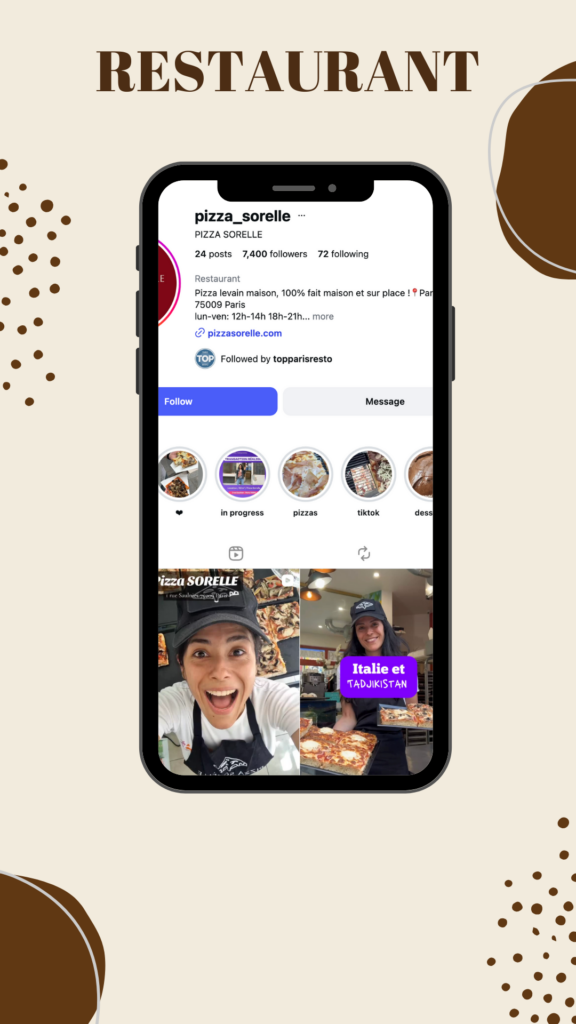
Instagram has become a powerful tool for restaurants. A well-managed Instagram business page for restaurants can showcase dishes, attract new followers, and build a strong visual identity. For small and independent restaurants especially, social media often feels easier, faster, and more affordable than building a website.
But more customers are now searching on Google, Google Maps, and mobile devices to find practical information such as menus, opening hours, and location. This leads to an important comparison in 2026:
Restaurant website vs Instagram — which one actually helps customers choose your restaurant?
In this article, we’ll compare a restaurant website vs Instagram business page, explore what each does well, where each falls short, and answer the question many restaurant owners are asking today:
Do restaurants really need a mobile restaurant website?
Table of Contents
Do restaurants really need a mobile restaurant website, or can Instagram do the job on its own?
What an Instagram Business Page Does Well
An Instagram business page for restaurants is an effective way to build visibility and engagement. It allows restaurants to share photos, videos, and updates that help communicate their brand and atmosphere.
Instagram works particularly well for:
- Visual storytelling
- Engaging with followers
- Sharing daily specials or events
For many restaurants, Instagram is often the first step in building an online presence.
The Limitations of Instagram for Restaurants
An Instagram business page for restaurants can be visually appealing, but when it comes to helping customers make a decision, it has several important limitations.
Information is hard to find
Most customers visit a restaurant’s online page for practical reasons:
What’s on the menu? Where is it located? Are they open right now?
On Instagram, this information is often scattered across posts, highlights, captions, or comments. Customers may need to scroll, tap, and search — and many won’t take the time.
Too many distractions
Instagram is designed to keep users scrolling. While someone is looking at your restaurant, they are also seeing other restaurants, ads, influencers, and unrelated content. This makes it easy for potential customers to get distracted before taking action, such as calling, booking, or visiting your location.
Limited control over your presence
With Instagram, you don’t fully control how your page is displayed or who sees it. Algorithm changes, account restrictions, or platform outages can instantly affect your visibility. Your restaurant online presence depends on a platform you don’t own.
Not optimized for search
Many customers don’t discover restaurants through social media — they search on Google or Google Maps. Instagram pages are not designed to rank well in search results, especially for location-based queries. This means relying only on Instagram can limit your visibility when customers are actively looking for a place to eat.
These limitations don’t mean Instagram is useless — far from it. But they do raise an important question in the restaurant website vs Instagram debate:
Is Instagram alone enough to turn online attention into real customers?
Why a Mobile Restaurant Website Still Matters in 2026
In 2026, most customers don’t visit restaurant websites on a desktop computer — they find them on their phones. That’s why a mobile restaurant website is no longer about design or branding alone, but about clarity, speed, and action.
A mobile-friendly restaurant website puts all essential information in one place: menu, opening hours, location, and contact details. Instead of scrolling through posts or highlights, customers can immediately find what they need and decide whether to visit your restaurant.
Designed for real customer actions
Unlike social platforms, a restaurant website is built to help customers take the next step. With a restaurant website optimized for mobile, users can:
- Call your restaurant in one tap
- Get directions via Google Maps
- Check the menu before arriving
There are no ads, no competing content, and no distractions — just a clear path from search to visit.
Visible where customers are searching
Many dining decisions start on Google, not on social media. A mobile restaurant website works seamlessly with Google Search and Google Maps, making your restaurant easier to find when customers are actively looking for nearby options.
Simple websites work best
For most restaurants, a large or complex website isn’t necessary. What matters is having a simple restaurant website or a one-page restaurant website that loads quickly, looks good on mobile, and delivers essential information clearly.
This is why, in the restaurant website vs Instagram discussion, the question isn’t whether Instagram is useful — it’s whether Instagram alone can replace a mobile website designed to convert interest into real customers.
Restaurant Website vs Instagram: A Clear Comparison
When deciding between a restaurant website vs Instagram business page, many restaurant owners assume they must choose one or the other. In reality, the two serve very different purposes — and understanding those differences is key to building an effective restaurant online presence in 2026.
The table below highlights how a mobile restaurant website compares to an Instagram business page for restaurants in the areas that matter most to customers.

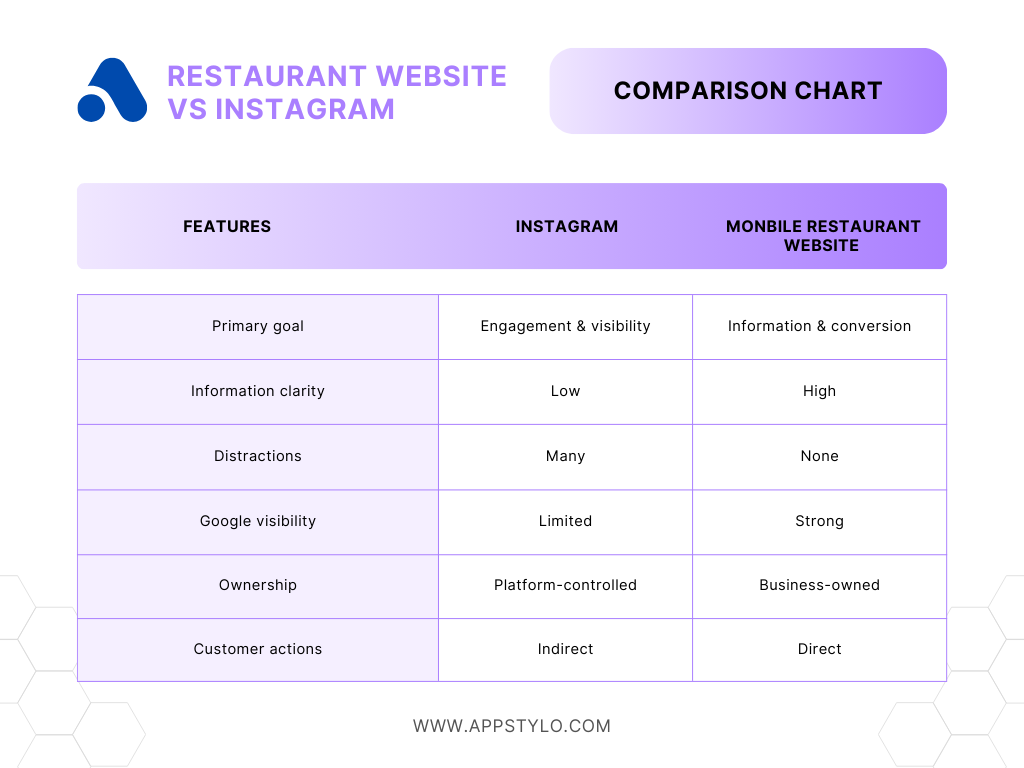
Instagram excels at attracting attention and showcasing your brand personality. A restaurant website, on the other hand, is designed to answer practical questions quickly and help customers take action.
This comparison shows why the restaurant website vs Instagram debate isn’t about replacing one with the other. Instagram creates interest, but a mobile-friendly restaurant website turns that interest into visits, calls, and reservations.
What Kind of Website Do Restaurants Really Need?
When restaurant owners think about building a website, many imagine something complex, expensive, and time-consuming. But in reality, most restaurants don’t need a large or traditional website to succeed online.
What they need is a simple restaurant website designed for mobile users.
Simple, clear, and mobile-first
A one-page restaurant website is often more effective than a multi-page site. On a single, mobile-friendly page, customers should be able to quickly see:
- Your menu or product highlights
- Your location with Google Maps
- Opening hours
- How to contact you or start a conversation
No unnecessary pages, no complicated navigation — just clear information presented in a way that works on a phone.
Built for everyday use
A restaurant website doesn’t need to be updated daily. Once the essential information is in place, it should continue working in the background while you focus on running your business. A mobile restaurant website should be easy to manage, quick to load, and reliable.
The missing link between search and social
For many restaurants, the website becomes the central link between different channels:
- Linked in your Instagram bio
- Found through Google Search and Google Maps
- Shared via QR codes in-store or on menus
In the restaurant website vs Instagram discussion, this type of simple, mobile-first website fills the gap between visibility and action — helping customers move from discovery to decision without friction.
Conclusion: Do You Really Need a Restaurant Website in 2026?
Instagram remains an important channel for restaurants, but it is not designed to replace a website.
A restaurant website, especially a mobile restaurant website, gives restaurant owners control, visibility on Google, and a clear way for customers to take action.
For restaurants that want a clear, mobile-first page without building a full website, tools like Appstylo are designed to keep things simple. It allows restaurants to create a single mobile page with essential information — menu, images, location, and contact — that can be linked from Instagram, Google, or QR codes.
No complex setup, no unnecessary features — just a practical page that helps customers find what they need and decide faster.